”The way you sleep shapes the way you live” Yes that’s correct. If you are struggling to fall asleep, or waking up feeling tired everyday, this article is for you!
In this guide, I’m sharing 10 practical and relaxing night routine ideas that can help you fall asleep faster, stay asleep longer, and wake up feeling refreshed from the inside out. Welcome to another chapter of Beingbetter.blog.

1. Set a Consistent Sleep Schedule
A regular sleep schedule is the most powerful way to train your brain for deep and peaceful rest.
Here are some tips to make it
✅ 1. Pick a Realistic Bedtime
- Choose a bedtime you can maintain most days.
- If you’re a night person, don’t aim for 9 PM overnight. Start with just 15-30 minutes earlier and gradually adjust.
✅ 2. Set a Bedtime Alarm
- Set a gentle “wind-down” alarm about 60–90 minutes before bed.
- It’s your cue to wrap things up: no more work, no more screens, just soft lighting and slower energy.
✅ 3. Fix Your Wake-Up Time First
- Surprisingly, the easiest way to reset your sleep cycle is to wake up at the same time every day — even if your sleep was short.
- After a few days, your body naturally starts feeling sleepy at the right time.
✅ 4. Use Morning Light
- Step outside or open your curtains right after waking up. Natural morning light resets your internal clock and trains your body to sleep earlier the next night.
✅ 5. Create a Short “Pre-Bed Ritual”
- Doing the same 3–4 calming things every night (like skincare, journaling, and stretching) tells your body, “Ah, it’s bedtime.”
✅ 6. Limit Naps After 3 PM
- Afternoon naps can push your bedtime later. If you’re tired, go for a walk or stretch instead.
A consistent sleep schedule isn’t just about falling asleep faster — it impacts almost everything in your daily life:
- Deepens your sleep — so you feel more refreshed with fewer hours
- Improves focus and memory
- Reduces stress and anxiety
- Boosts immunity and hormone balance
- Improves mood
So tonight, just try starting your wind-down 15 minutes earlier.
2. Dim the Lights an Hour Before Bed
At night, especially during your wind-down hour, bright overhead lights can confuse your body, tricking it into thinking it’s still daytime. That’s when melatonin — your natural sleep hormone — gets suppressed, making it harder to fall asleep or stay asleep.
Here are some tips to overcome that situation
Switch to Warm-Toned Bulbs, Soft Lamps or LED Candles
Cool white or blue light feels energizing — like daylight. Instead, use warm white bulbs (think soft yellow or amber) in your bedroom and living space. They feel cozier and more restful.
Another option is low-watt bedside lamps which can create a gentle glow that signals your brain to slow down. It makes your space feel like a calm retreat, not a work zone.
Also, just 15–30 minutes of candlelight during your bedtime routine can lower your cortisol levels, helping you relax deeply before sleep.
Turn Off Harsh Overhead Lights
Overhead ceiling lights tend to be harsh and overly bright. As part of your wind-down routine, turn them off completely and rely on your soft, warm lights instead.
Here is the importance of dimming the light
- Triggers melatonin production
As the lights dim, your brain naturally starts producing melatonin, telling your body it’s time to rest. - Creates a calming environment
Soft lighting reduces mental stimulation and helps your nervous system shift from “go mode” to “slow mode.” - Improves bedtime mood and mindfulness
You become more present, peaceful, and aware — which is the perfect mental space to enter sleep.
3. Power Down Screens Early
Our phones, TVs, and laptops give off blue light, which tricks your brain into thinking it’s still daytime. That light blocks melatonin (your natural sleep hormone) and keeps your brain wired — even if your body feels exhausted.
So if you’re struggling to fall asleep or waking up groggy, it might be time to break up with your screen… at least an hour before bed.
How to Power Down Easily
Set a “No-Screen” routine
Decide on a screen-off time — ideally 30 to 60 minutes before bed.
Create a Charging Station Away from Bed
Charge your phone in a different room or across the room from your bed. Keeping it out of reach removes the temptation to scroll.
📖 Replace the Habit, Don’t Just Remove It
Instead of staring at your phone, try:
- A paperback book (fiction works great for bedtime)
- A soothing podcast or guided sleep meditation
- Soft instrumental music or nature sounds
(Switch your phone to night shift mode or use blue-light-blocking glasses if screen use is unavoidable.)
Set the Mood Physically
Put your phone in “Do Not Disturb,” turn off overhead lights, and crawl under your blanket with a book or your thoughts. Let your mind slow down — like a soft fade-out at the end of a peaceful day.
Here’s how it works
- Lets your brain shift into rest mode — no more late-night stimulation
- Promotes melatonin production — helping you fall asleep faster and stay asleep longer
- Reduces racing thoughts — especially the kind that come from endless scrolling
- Improves emotional calm — no social media stress, news overload, or decision fatigue
So tonight, try putting the phone away a little earlier. Choose stillness instead of stimulation — your sleep will thank you. 💖
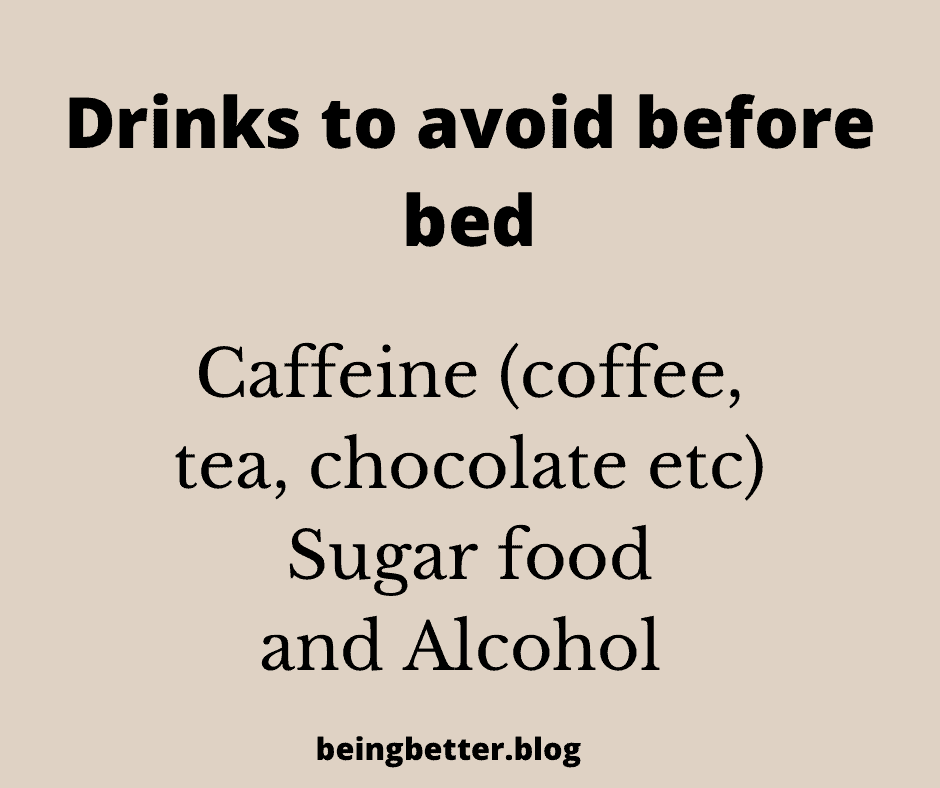
Also, keep in mind to avoid these drinks before bedtime
4. Do Gentle Movement or Stretching
Why Gentle Movement at Night Helps
- Calms the nervous system
Slow movement activates your parasympathetic (rest & digest) system — easing stress and anxiety. - Releases stored tension
We carry emotional and physical stress in our shoulders, hips, and lower back. Stretching helps release that tightness. - Prepares the body for stillness
Moving gently before bed helps your body settle down faster once you’re under the covers.
Feel each stretch, breathe deeply, and let this be your nightly “exhale.” Even just 3–5 minutes of still movement can reset your whole evening energy.
5. Journal or Do a Brain Dump
And this is my favourite bedtime routine.
Journaling is one of the most effective ways to clear all our mental clutter by getting it out of your head and onto paper. Journaling or doing a simple brain dump at night gives your mind permission to pause — and makes space for rest.
What’s a Brain Dump, Anyway?
It’s exactly what it sounds like: a no-pressure space where you pour out anything on your mind. This could include:
- Thoughts that won’t stop repeating
- Worries you’re carrying
- Tomorrow’s to-do list
- Emotions you haven’t had time to process
- Even random ideas or reminders!
✨ Try this tonight:Grab a notebook and just write — without judgment, without editing. Feel the release.
Want More Structure?
You can try these common prompts during night routine.
- What’s one thing I’m proud of today?
- What’s weighing on my heart right now?
- What can I let go of before I sleep?
- What do I want to carry into tomorrow?
If you want more guidance on journaling and prompts, read some of my previous articles mentioned below.
👉 The Ultimate Guide to Journaling
👉 Powerful Types of Journaling (+ Prompts)
Power of Journaling as a bedtime routine
- Empties your busy mind so you’re not carrying thoughts into bed
- Reduces anxiety and overthinking — especially helpful for sensitive or overactive minds
- Brings clarity and emotional release — you feel lighter and more in control
- Creates closure for the day — no unfinished loops in your brain

6. Practice Gratitude or Prayer
Gratitude and prayer can quietly shift your entire energy.
Just a few sincere moments spent reflecting on what went right can turn restlessness into peace… and soften your heart into stillness.
Practicing gratitude helps in reducing stress and emotional heaviness by letting go of complaints and focusing on good
The more you look for the good, the more you find it
This further helps in creates a loving, quiet energy that helps us close the day gently
A Simple Nightly Gratitude Practice
Here are some questions to ask yourself every night to practice gratitude
- What made me smile today?
- What small thing am I thankful for right now?
- Who showed me kindness today?
- What did I do well — even just a little?
We should be thankful to every blessings in our life like peaceful life, a house to live, food to eat, having relatives or partner or kids, our health etc.
The life we live today can be a dream life of many people, don’t forget that. So be thankful
If you are a religious person, a quiet and thankful prayer can works well. Here’s an example
“Thank you for today. Help me let go of what I can’t control. Please bring peace to my heart and rest to my body.” (do it in your own words)
Tonight just be grateful for whatever you have and feel the magic.
7. Follow a Simple Self-Care Ritual
Do you know that, little things we do for ourselves have a deeply calming effect at the end of a day?
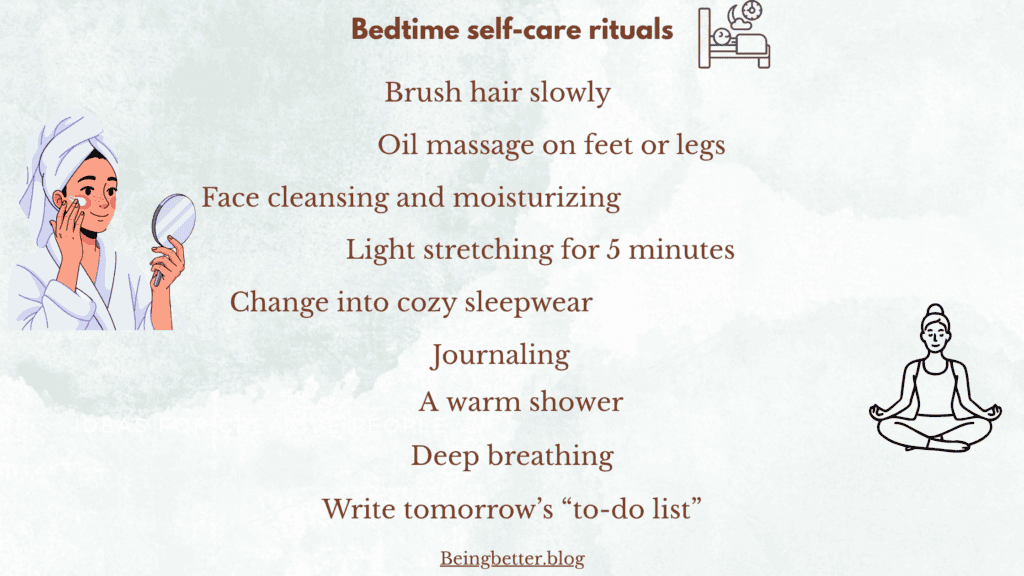
Whether it’s washing your face, brushing your hair, or slipping into your favorite cozy pajamas — these aren’t just hygiene steps. They’re signals to your body and mind that the day is done, and it’s safe to slow down.
Also regular self care practices build routine consistency which is the key to long term sleep quality
Another benefit is that our gradually our body associates these rituals as winding down which helpful in fall asleep faster.
Easy Self-Care Rituals to Try at Night
8. Listen to Sleep Sounds or White Noise
Sleep sounds and white noise don’t just block out distractions — they also help create a steady, soothing audio environment that tells your brain it’s safe to drift off. It’s like a soft lullaby for your nervous system.
Some days I had this problem and what helps me is sound of a portable table fan. It worked well for me in blocking most of the noises from surroundings.
Also, if you interested, use a free sleep sound app, Spotify playlist, YouTube video, or a white noise machine. Set a timer if you don’t want it playing all night.
Here’re the benefits of using sleep sounds for sleep deprived people
- Calms the brain’s alert center — steady sounds lower arousal and help the mind settle
- Masks inconsistent background noise — so you don’t wake up from sudden sound changes
- Lulls you into a rhythm — especially when your thoughts won’t stop
- Builds a bedtime association — your brain begins to connect these sounds with relaxation and sleep
9. Optimize Your Sleep Environment
Your bedroom isn’t just a place to sleep — it’s your recharging space. And with a few small tweaks, it can become the perfect nest for deep, uninterrupted rest. 🌙✨
Keep appropriate room temperature
Research shows the ideal sleep temperature is around 65–70°F (18–21°C). Your body naturally cools down at night — so keeping the room cool (not cold!) helps signal it’s time to sleep.
Use breathable cotton or bamboo bedding, and keep an extra blanket nearby for cozy layering.
Invest in a Comfortable Mattress & Pillows
Because a side sleeper needs firm mattress and supportive pillow while a back sleeper requires thinner pillows. So, choose whichever good for you as they determine our quality of sleep.
Make It Dark
Light is one of the biggest factors that can disrupt melatonin production. To sleep deeply, your room should feel like real night darkness
Ways to darken your room:
- Use blackout curtains or blinds
- Try a comfortable sleep mask
- Turn off hallway nightlights or glowing electronics
Dimming your room early in the evening also helps prepare your body for sleep, even before your head hits the pillow.
Keep It Clean, Calm, and Clutter-Free
A messy or chaotic room = a distracted and unsettled mind. Even a 5-minute tidy-up before bed can help your brain rest better.
- Keep surfaces clear
- Use calming colors and textures
- Add a soft lamp, salt lamp, or essential oil diffuser for a peaceful vibe
10. Practice Deep Breathing
Some nights, your body feels tired — but your mind just won’t stop spinning. That’s where deep breathing becomes your secret sleep tool. ✨
Try This Soothing Breathing Technique:
Inhale slowly through your nose for 4 seconds
Hold your breath gently for 4 seconds
Exhale softly through your mouth for 6 seconds
Repeat for 5–10 rounds, or until your body starts to feel heavier and more relaxed.
This simple pattern slows your heart rate, lowers cortisol (your stress hormone), and sends a message to your brain: You’re safe. You can rest now.
Make It a Peaceful Ritual
- Do it while lying in bed, right after turning off the lights
- Pair it with soft music, a sleep sound, or a gentle pillow spray
- Close your eyes, place a hand on your belly, and feel it rise and fall — like waves
Even just 2–3 minutes of slow breathing can work wonders, especially when paired with your other bedtime rituals.
Your breath is always with you — quiet, steady, and ready to help. You don’t have to fix or force anything. Just breathe. Let each exhale melt the tension, clear the noise, and carry you gently into rest.
That’s all dear beauties. I hope these 10 ideas I’ve shared could be helpful for you. I’m just feeling happy to share these as they works well in improving our sleep. Tonight just try them if you want and feel the difference gradually. I’m sure you’ll get a sleep consistency if you try.