A Complete Guide on Journaling
Welcome to another article of Beingbetter!
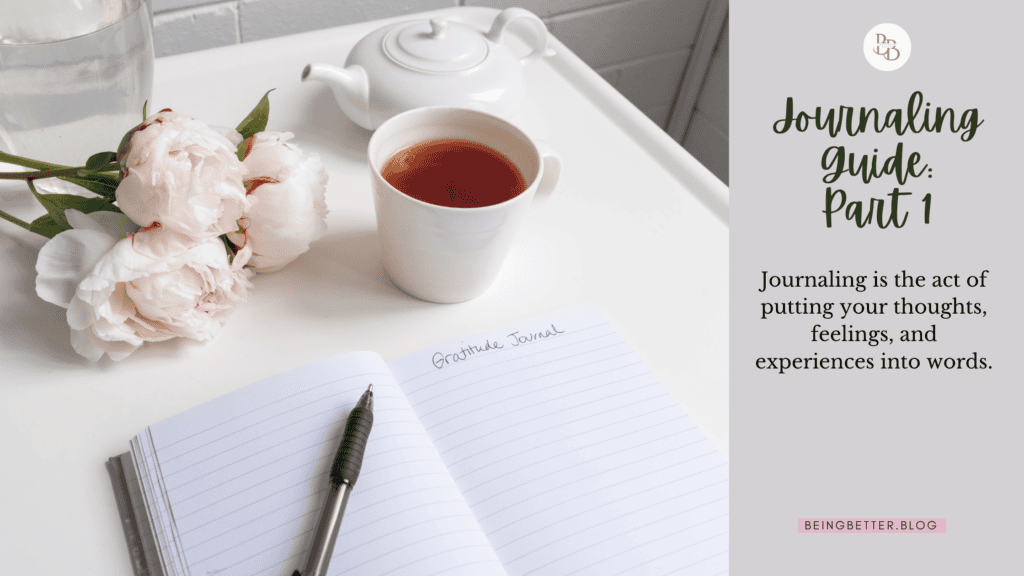
Let’s keep it simple—journaling is the act of putting your thoughts, feelings, and experiences into words. It’s like having a deep, honest conversation with yourself on paper (or screen!). No rules. No filters. Just you, your thoughts, and a safe space to let it all out.
You don’t have to be a writer or poet to journal.
Journaling is about expression, not perfection.
Whether you’re jotting down your thoughts before bed, making a list of things you’re grateful for, or tracking your daily habits—yes, that’s journaling too!
Some people use journals to vent emotions, others to dream big, and many to simply make sense of their busy minds.
Think of it as mental decluttering.
When life feels heavy, journaling lightens the load. When you feel lost, journaling helps you find your way back.
In this guide, we’re diving deep into the world of journaling—not just what it is, but how you can make it a powerful and personal part of your daily life.
Let’s get started.
Why Should We Journal?
Life gets overwhelming.
Our minds are full, emotions feel tangled, and sometimes it’s hard to even hear ourselves think.
That’s where journaling steps in.
It’s not just a writing habit—it’s a wellness tool, a gentle release, and a personal space that listens without judgment.
Here are some realistic and practical benefits of journaling that many of us (myself included!) experience—and you can too:
1. Clears a Cluttered Mind
Journaling helps you get all that mental mess onto paper, making your thoughts feel lighter and more manageable.
- Helps you sort through worries, plans, and random thoughts
- Gives you clarity when you’re feeling confused or overwhelmed
- You often realize things make more sense once they’re written down
2. Emotional Release & Stress Relief
When emotions are bottled up, they get heavier.
Journaling is like letting out a deep sigh—it helps you vent, cry, laugh, and heal through words.
- Safely express anger, sadness, anxiety, or joy
- Avoid emotional outbursts by processing your feelings first
- It’s like free therapy (and always available!)
Some of my most emotional days ended with a calm heart—all thanks to an open page and a little honesty.
3. Boosts Self-Awareness
Journaling shines a light on your inner world.
You start noticing your own patterns, triggers, strengths, and growth.
- Understand why you feel what you feel
- Recognize recurring thought habits (helpful or harmful)
- Build a deeper connection with yourself
Looking back at old entries, I often find moments of clarity I didn’t even realize I had back then.
4. Tracks Growth & Progress
Small wins matter. Journaling documents your journey, even when it feels slow.
- See how far you’ve come over weeks or months
- Celebrate little milestones you may have forgotten
- Reminds you that change is happening—even when it doesn’t feel like it

5. Sparks Creativity & Ideas
Journaling opens the door to new thoughts, fresh ideas, and unexpected inspiration.
- Get unblocked creatively
- Explore dreams, goals, or personal projects
- Helps you think differently about everyday problems
6. Keeps You Grounded in the Present
Writing about your current thoughts, feelings, or surroundings brings you back to the here and now.
- Reduces overthinking
- Anchors you in the moment
- Combats anxiety by slowing your mind down
7. Improves Focus & Decision-Making
When everything’s cluttered in your head, it’s hard to choose.
Writing helps you see your options clearly and make better, more intentional decisions.
- List pros and cons
- Explore your choices without pressure
- Gain insight into what really matters to you
Journaling has helped me make big life choices—by simply writing out my honest thoughts.
8. Encourages Gratitude & Positivity
A simple gratitude journal can shift your mindset from “what’s missing” to “what’s already good.”
- Boosts mood and optimism
- Increases appreciation for small joys
- Helps balance out negative thoughts
9. Supports Mental & Emotional Health
Journaling isn’t a cure-all, but it’s a steady, calming friend.
It can help reduce symptoms of anxiety, depression, and emotional burnout—backed by research and real-life stories.
- Builds emotional resilience
- Supports other wellness practices like therapy or meditation
- Creates a space to process trauma gently over time
Different Types of Journaling (Find Your Style!)
One of the best things about journaling? There’s no “one right way” to do it.
Everyone’s mind works differently—and luckily, journaling has many styles to match your mood, purpose, and personality.
Here, I briefly explain the different types of journaling. However, I have a detailed article on different types of journaling with journal prompts so you can easily find your match.
Gratitude Journal
A space to regularly note things you’re thankful for, helping you focus on the positive in your life.
Daily Journal
A record of your everyday thoughts, emotions, and experiences—like a personal diary.
Bullet Journal
A customizable system that combines journaling with task lists, habit trackers, and goal planning.
Stream of Consciousness / Morning Pages
A raw, unfiltered style of journaling where you freely write whatever comes to mind, often used to clear mental clutter.

Dream Journal
A place to write down your dreams immediately after waking up to explore subconscious thoughts and patterns.
Goal & Vision Journal
Used to outline your goals, dreams, affirmations, and progress toward the life you want to create.
Art or Visual Journal
A creative journal where you express yourself through doodles, sketches, colors, and visual elements instead of just words.
Healing or Therapy Journal
A safe emotional space to process feelings, past wounds, or mental struggles through reflective writing.
Travel Journal
Captures your travel experiences, memories, and impressions from places you visit.
Wellness or Habit Tracker Journal
Focuses on tracking your health, habits, routines, moods, or self-care activities to support your well-being.
How to Start Journaling as a Beginner (Step-by-Step)
So… you’re ready to start journaling, but don’t know where to begin?
Don’t worry! You don’t need to be a “writer,” have perfect grammar, or even know what to say. Journaling is all about your thoughts, your pace, and your voice.
Let me walk you through it, step by step:
Step 1: Decide Why You Want to Journal
Before you pick up a pen, ask yourself:
Why am I doing this? What do I hope to get from it?
Your reason could be:
- To clear your head
- To manage stress
- To become more self-aware
- To track your habits or goals
- To simply feel better
Knowing your “why” helps you stay motivated—and choose the right journaling style later.
Step 2: Choose Your Journal Format
Next, decide how you want to write.
You can choose:
- A physical notebook or diary (lined or plain)
- A digital journal app
- A Word/Google Doc
- Even your Notes app on your phone!
If you enjoy the feel of pen and paper, go for it! But if you’re always on the go, digital journaling might be easier to keep up with.
Step 3: Pick a Time That Works for You
There’s no “perfect” time—but consistency helps.
Ask yourself:
- Do I want to write in the morning to start fresh?
- Or at night to reflect and unwind?
- Can I spare 5–10 minutes a day?
Attach journaling to an existing habit, like after brushing your teeth or before bed. This makes it easier to stick with.
Step 4: Start Simple (Really Simple)
As a beginner, keep it light.
No pressure to fill pages or make it “deep.”
Here’s how you can begin:
- “Today, I feel…”
- “Right now, my mind is full of…”
- “One thing I’m grateful for today is…”
- “What went well today?”
- “Something that’s bothering me is…”
Even writing one honest sentence counts!
Step 5: Don’t Worry About Perfection
Your journal is a judgment-free zone.
Spelling, handwriting, grammar—it doesn’t matter.
No one’s going to read it but you, so be real.
Messy, emotional, boring, joyful—whatever you write is okay.
Step 6: Try Different Styles Until One Feels Right
There’s no rule that says you have to stick to one type of journaling.
Try out a few and see what clicks:
- One day: gratitude list
- Another day: brain dump
- Next day: goal tracking
- Maybe even doodles or quotes!
Step 7: Be Patient and Kind with Yourself
Like any habit, journaling takes time to settle in.
Some days you’ll feel excited to write, others not so much—and that’s normal.
If you skip a day or week, don’t feel guilty. Just come back when you’re ready.
This is a practice for you, not a chore.
Your journal will always be there waiting for you—no judgment, just open pages.
Beginners Special Tips
- Light a candle or sip tea while journaling—it helps make it feel like “me time”
- Keep your journal somewhere visible (like on your nightstand)
- Set a gentle reminder on your phone if you tend to forget
- Reward yourself when you hit a small milestone, like journaling for 7 days straight!
Starting a journal isn’t about doing it “right”—it’s about doing it your way.
It’s a quiet space to reconnect with yourself, feel lighter, and grow over time.
So don’t overthink it—just write like you’re talking to a kind friend (because that friend is you).